Sustainable Rice Farming: Water, Soil & Farmer Welfare In Modern Paddy
Inside the on-farm practices reshaping how rice is grown — AWD irrigation, zero-tillage, integrated pest management, and the welfare programs supporting the farmers behind every grain.
Why Sustainability Is Now A Purchasing Criterion
Grocery chains and hospitality groups are under real pressure to report Scope 3 emissions. Rice — with its methane footprint and water intensity — sits squarely in the spotlight. Sustainable sourcing is no longer a marketing line; it's an audit item.
Water: AWD & Drip Irrigation
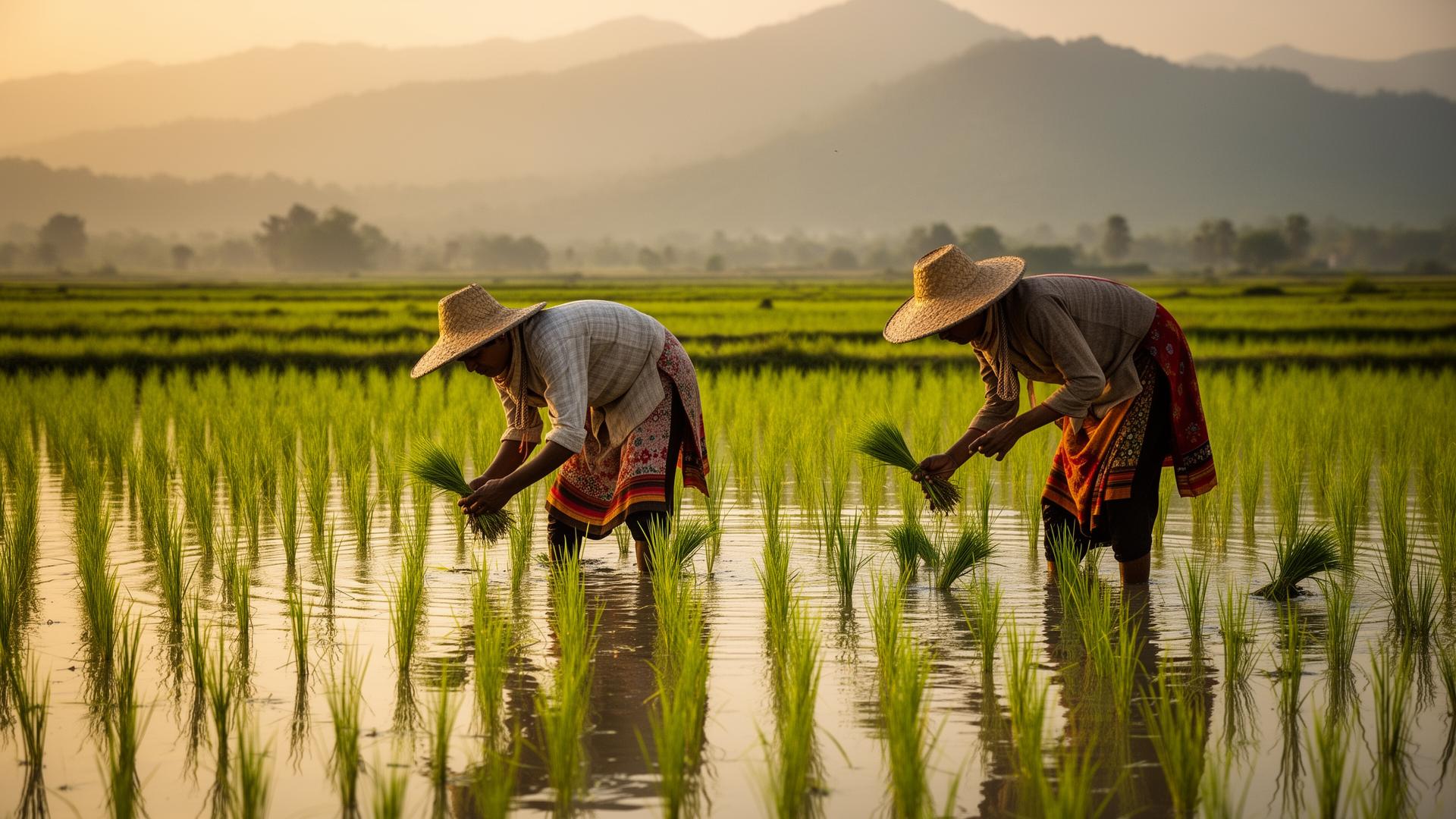
Alternate Wetting and Drying (AWD) cuts paddy water use by 30% and methane emissions by up to 48% without yield loss. Drip and sprinkler systems on basmati farms in Punjab now save 30–40% of pumped water.
Soil Health
Zero-tillage, cover cropping, biochar and vermicompost rebuild topsoil structure and microbial life. Healthy soil is more resilient to climate stress and produces grain with better milling outturn.
Farmer Welfare
Fair-wage contracts, health-insurance subsidies, scholarships for farmers' children, and on-farm safety training are now table stakes for any supplier serious about ESG-aligned customers.