From the first cut of the sickle to the final seal on the container, discover the people, places, and patience behind every grain we deliver across Canada and worldwide.
Punjab & Haryana, India October – November
Chapter 01
The Golden Harvest Season
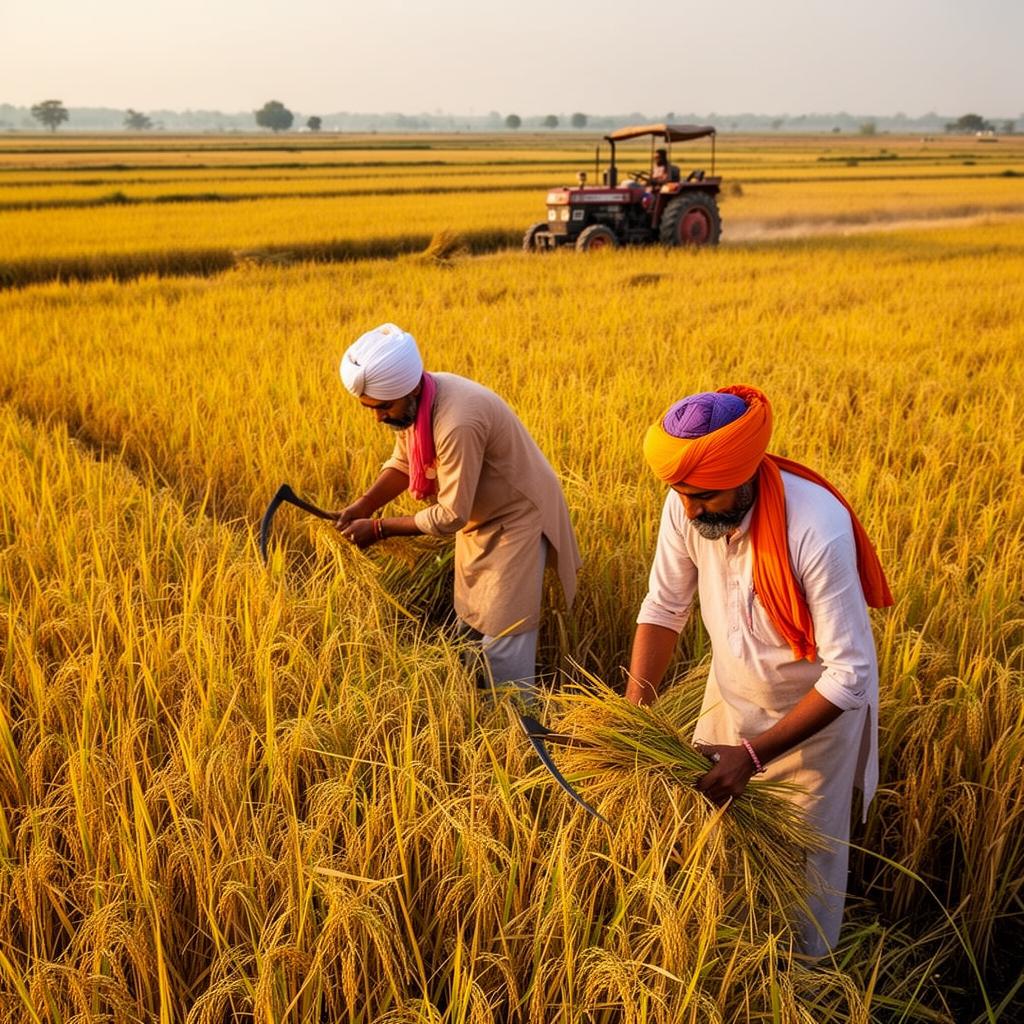
Each autumn, the fields of Punjab and Haryana turn a brilliant gold. For three generations, our partner farms have hand-harvested basmati using techniques passed down through families.
The harvest begins when the moisture content of the paddy drops to 20–22% — a window of just 10–14 days that determines the quality of the final grain. Our farmers test daily, waiting for the perfect moment.
Unlike mechanised harvesting that can bruise delicate long-grain varieties, many of our partner farms still use manual sickle cutting for premium basmati. The stalks are cut close to the ground, bundled, and left to dry in shocks for 48 hours.
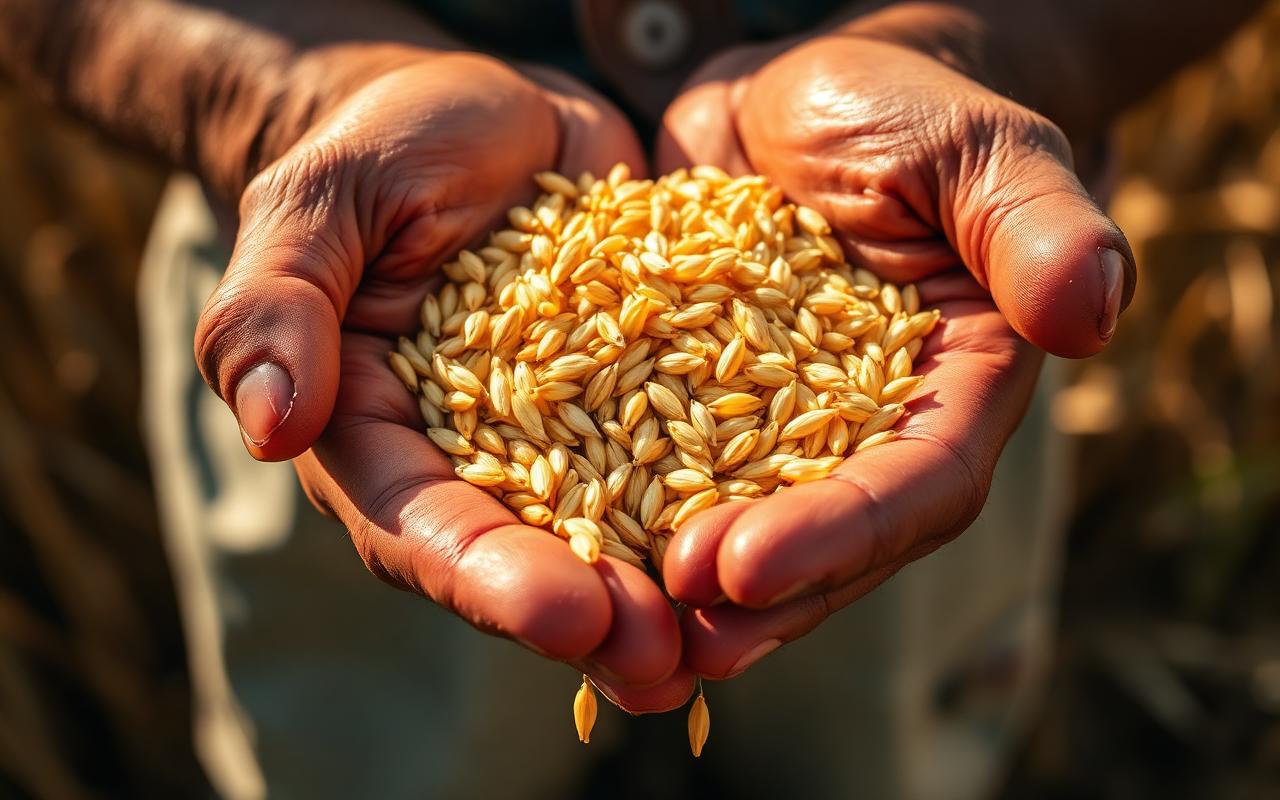
This patience produces the 8.2mm+ extra-long grains that our buyers expect. Rushed harvesting breaks grains, reduces aroma, and diminishes the cooking ratio.
8.2mm+
Avg. grain length
10–14 days
Harvest window
48 hrs
Drying time
Uttar Pradesh, India Year-round
Chapter 02
From Their Hands to Yours
Meet the farmers. Behind every sack of rice is a family that woke before dawn, tended the paddies through monsoon rains, and celebrated the harvest with the same joy as their grandparents did.
We work with over 200 smallholder farming families across India and Thailand. The average farm size in our network is just 4.2 acres — small enough that every field receives personal attention, large enough to meet our volume commitments.
Our farmer partners receive advance payments before planting, guaranteed minimum prices at harvest, and premium bonuses for aroma scores above 90. This stability lets them invest in better seed, organic fertilisers, and irrigation.
When you buy from PARV Agri Foods, you are not just purchasing rice. You are supporting children's school fees, well-digging projects, and solar-powered cold storage in villages that previously lost 30% of their crop to spoilage.
"Since partnering with PARV, I have been able to send both my daughters to school. The guaranteed price means I sleep peacefully during harvest."
200+
Partner families
4.2 acres
Avg. farm size
90+
Aroma score
Amritsar, India Year-round
Chapter 03
Inside the Mill: Where Science Meets Tradition
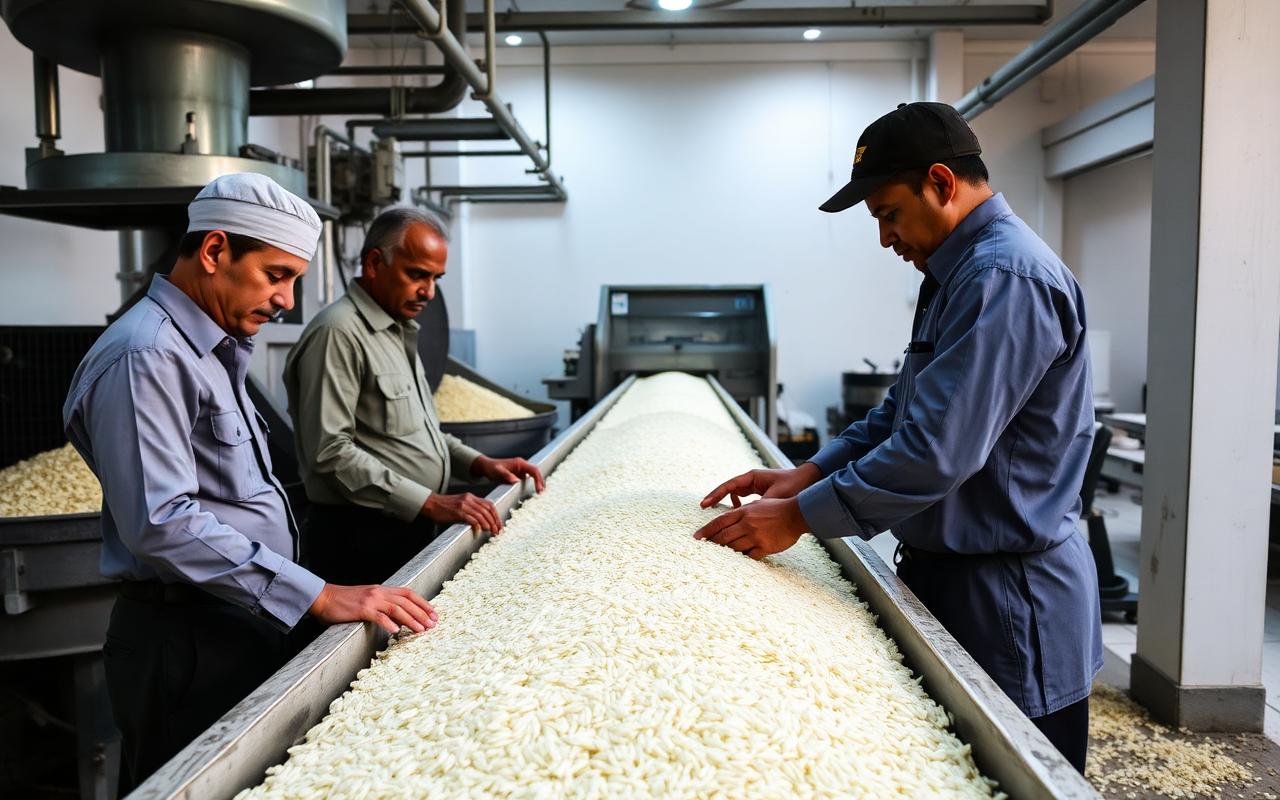
Take a walk through our partner mill in Amritsar. The air smells of toasted basmati. Modern sorting machines whirr alongside stone polishers that have been in use for fifty years.
The milling process is where raw paddy becomes the rice you cook. First, pre-cleaning removes stones, straw, and immature grains. Then husking gently separates the husk from the brown rice without cracking the kernel.
Our partner mill uses a combination of colour sorters and gravity separators. The colour sorters — each equipped with 6,400 high-speed cameras — inspect every single grain at 30,000 frames per second, removing any discoloured or defective kernels.
The final polishing step is deliberately light. Heavy polishing strips away nutrients and aroma. We polish just enough to give the grain its characteristic silky sheen while preserving the bran layer that holds the basmati's signature fragrance.
30,000 fps
Camera inspection
99.8%
Defect removal
Light
Polish retention
Northeast Thailand November – January
Chapter 04
Sun, Wind, and Patience
Before milling, moisture must fall from 22% to 12–14%. In Thailand's jasmine rice belt, many farmers still trust the sun over mechanical dryers — and the results speak for themselves.
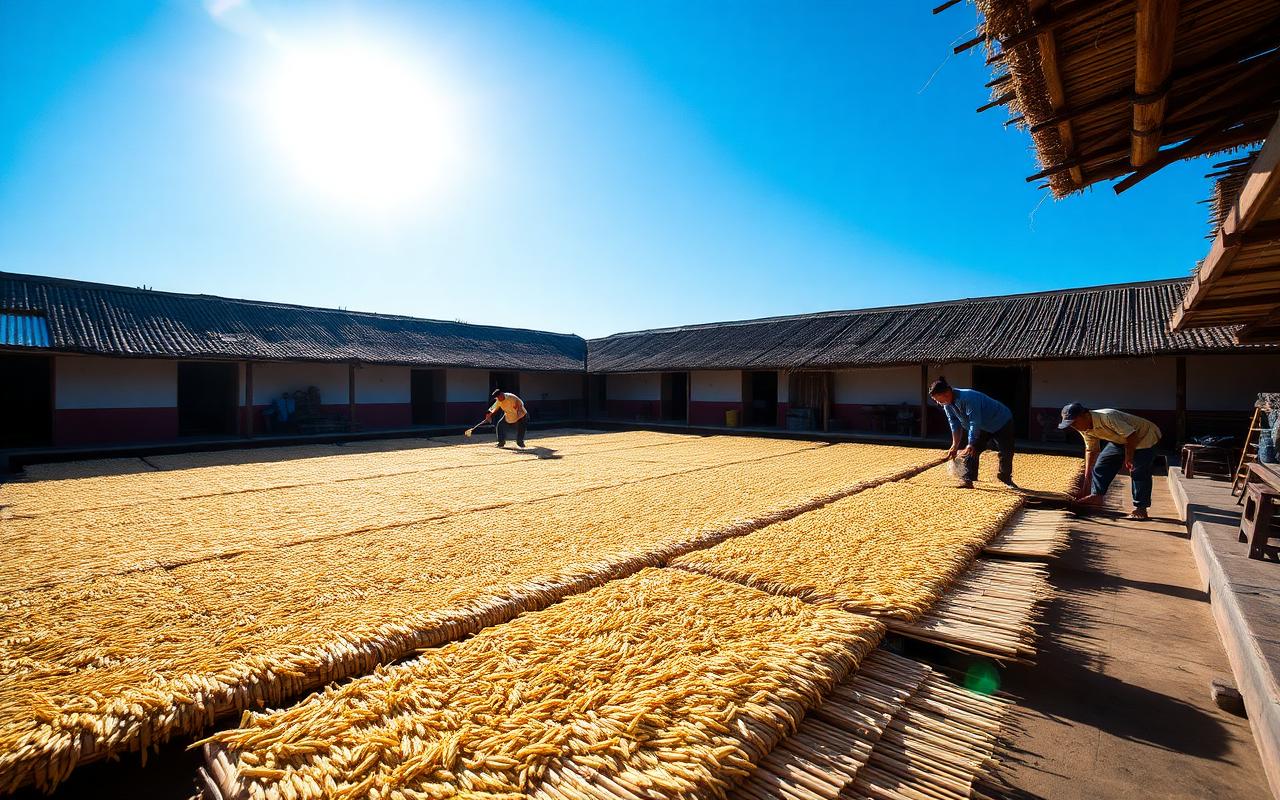
Mechanical dryers can process 50 tonnes in a day. But they run hot — sometimes too hot — caramelising the natural sugars in jasmine rice and muting its floral aroma. Our Thai partner farmers prefer open-air sun drying on bamboo mats.
The grains are spread thin — no more than 3cm deep — and raked every 90 minutes to ensure even exposure. Farmers monitor humidity, cloud cover, and wind speed like meteorologists. If rain threatens, everyone drops tools to cover the harvest.
This patience yields Hom Mali jasmine with a 4:1 cooking ratio and a fragrance so distinctive it carries its own GI (Geographical Indication) protection. You cannot rush excellence.
12–14%
Moisture target
3 cm max
Grain depth
90 min
Raking interval
Mundra Port, India Year-round
Chapter 05
The Last Mile: From Mill to Container
Watch as 22-tonne container loads of premium rice are packed, palletised, and sealed for their voyage to Canada and global ports. Every bag is traceable to the farm it came from.
After milling, the rice rests for 24 hours in temperature-controlled silos to equalise moisture. Then it moves to the packing hall, where it is weighed, bagged in food-grade PP with inner liners, and heat-sealed to prevent moisture ingress during the 45-day sea voyage.
Each bag carries a QR code linking back to the mill batch, farm origin, harvest date, and quality certificate. Buyers can scan and trace their rice to the exact paddy field where it grew.
Container loading is supervised by independent surveyors. We use moisture-absorbent pads, container desiccants, and pre-cooling to ensure the rice arrives at its destination in the same condition it left the mill.